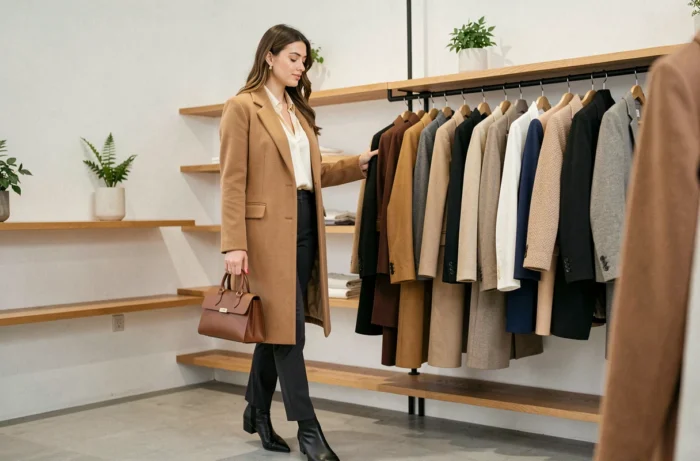
A colorful short jacket bought in April that goes with nothing in the closet, a “trendy” pair of pants worn twice before being relegated to a hanger: we all know this scenario. The problem doesn’t lie with women’s fashion trends themselves, but with how we integrate them into an existing wardrobe.
Instead of listing the current pieces without filter, it’s better to identify the few strong themes of the season that truly work in everyday life.
Anti-greenwashing directive: what changes for buying fashion in September 2026
Before discussing cuts and colors, a regulatory change will concretely modify how brands communicate. Starting September 27, 2026, the European directive (EU) 2024/825 prohibits vague environmental claims such as “eco-friendly,” “sustainable,” or “zero impact” unless supported by verifiable evidence.
For us, consumers, this means that “green collection” labels without certified independent labels will disappear from the shelves. In-house labels without external certification become illegal. A brand that claims “carbon neutral” solely through compensation will no longer be able to do so.
In practice, when we spot a piece that highlights its ecological aspect, we now check for the presence of an open certification scheme. Terms like “climate friendly” or “eco-friendly” without proof constitute an unfair business practice under the directive. You can also find analyses of these new rules on the fashion section of Femmes Du Monde, which closely follows these developments.
Butter yellow and warm tones: how to wear them without fashion faux pas
Butter yellow has established itself since spring-summer 2026 and remains one of the standout colors of the new season. On paper, it’s a soft shade, easy to wear. In practice, it can be a trap if paired incorrectly.
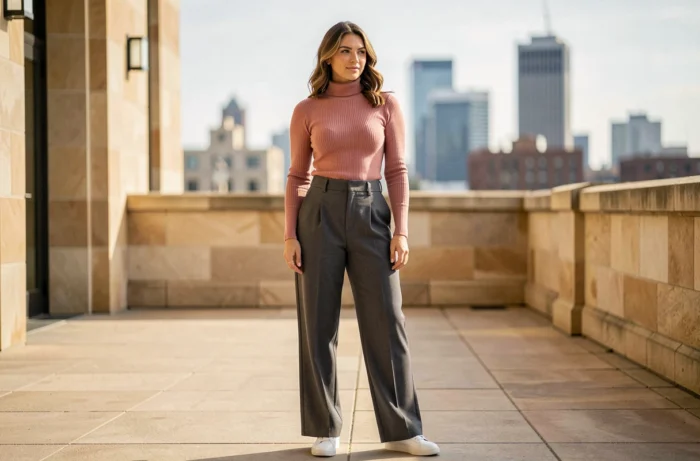
Butter yellow works better as a top piece or accessory than in a total look. A knit or oversized sweater in this shade, worn with beige pants or barrel jeans (the wide straight cut making a strong comeback), creates a coherent outfit without a costume effect.
Combinations that work in everyday life
- Butter yellow + off-white + raw denim: a bright trio that holds up from the office to the weekend, without requiring additional pieces
- Warm tones (terracotta, caramel) + a single butter yellow piece as a focal point: avoid color overload by keeping the rest of the outfit in muted colors
- Butter yellow as an accessory (bag, scarf, belt) on a black or navy base: the simplest way to integrate this color when hesitant to dive in
Feedback varies on this point depending on skin tones, but the rule that comes up most often is: the lighter the skin, the more one benefits from keeping butter yellow away from the face (so rather in a skirt or pants than on top).
Short jacket and short trench: choosing the right piece for your body shape
Two pieces are vying for the top spot this season: the colorful short jacket and the short trench. We see them everywhere, but they serve different purposes.
The short jacket structures the silhouette above the waist. It works well with high-waisted pants or midi skirts because it marks the top/bottom separation. On an H-shaped body (shoulders and hips aligned, little waist definition), it’s a good choice: it artificially creates a visual break.
The short trench plays a different role. It adds a layer without weighing down, and its fluidity suits A-shaped silhouettes (hips wider than shoulders) because it doesn’t cling the fabric to the hips.
Concrete criteria before purchase
Instead of reasoning in “trendy or not trendy,” we ask three practical questions:
- Does the piece close properly without pulling on the fabric? A structured garment like a short jacket loses all its effect if it gapes at the bust
- Does the length fall above or at the widest part of the hips? Below that, the shortening effect negates the interest of a short cut
- Does the fabric retain its shape after a few hours of wear? A short trench in too thin a fabric wrinkles quickly and gives a neglected appearance by midday
Building a seasonal look with closet pieces
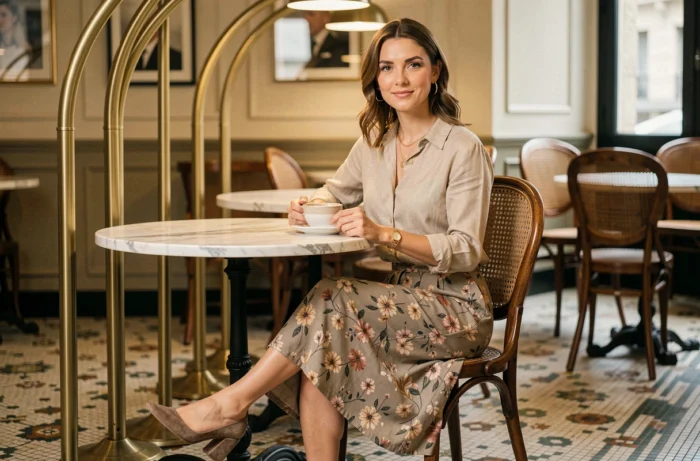
We often talk about “strong pieces” to acquire each season. In reality, a coherent style relies more on combinations than on purchases. The oversized sweater, for example, doesn’t need to be new to work: worn tucked in at the front with high-waisted beige pants, it immediately takes on a more polished look.
The midi dress, another classic often already in our wardrobes, transforms with a thin belt and a short jacket over it. This type of layering creates controlled volume and gives a seasonal look without additional purchases.
Knitwear: the return of the sweater as a central piece
Knitwear is becoming increasingly prominent in autumn-winter collections. A thick knit sweater, worn alone with barrel jeans or under a structured jacket, is enough to anchor an outfit. Opting for a knit with a certain density avoids the “pajama” effect and allows wearing the piece without an intermediate layer when temperatures are still mild.
The choice of knit color determines its versatility. A neutral color (ecru, heather gray, beige) pairs with almost everything. A knit in a strong color, like butter yellow or brick red, requires a sober bottom to avoid overwhelming the ensemble.
Embracing the women’s fashion trends of the season doesn’t require overhauling your wardrobe. The strong themes (warm colors, short cuts on top, dense knitwear) can be added to existing basics. The real change this season may be as much about the closet as it is about the shops, and the anti-greenwashing directive encourages us: fewer impulse purchases, better-chosen pieces, labels that we actually read.