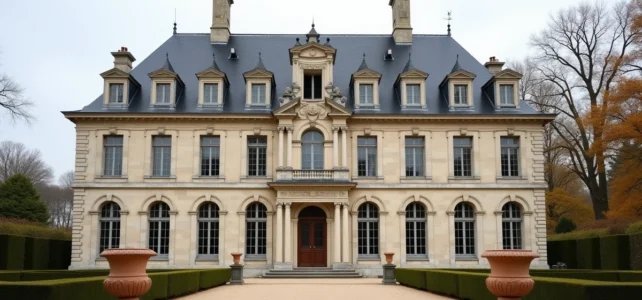
The Château de Groussay, located in Montfort-l’Amaury in the Yvelines, has changed hands regularly for two centuries. Its latest transfer in 2021 ended a period of legal uncertainty that threatened the future of the estate. Understanding who owns this place means tracing a history where aristocracy, decorative eccentricity, and contemporary heritage arrangements intersect.
SCI Château de Groussay: the legal structure behind the current ownership
Are you wondering why a château is named after a company and not a person? This is a common practice for private historic residences in France. The current owner is SCI Château de Groussay, a real estate civil company controlled by a French patron.
This acquisition, which took place in 2021, ended a period of judicial sequestration. The estate was then in a state of legal uncertainty that blocked any restoration or public opening projects.
An SCI allows for the separation of the owner’s personal assets from the property itself. In the case of transfer, major renovations, or partnerships with cultural institutions, this structure offers flexibility that personal ownership does not. To learn more about the owner of the Château de Groussay, several documentary sources trace this transmission journey.
The patron who leads this SCI has announced an ambitious cultural project, with a renovation phase estimated to last about two years. The stated goal: to transform Groussay into a cultural hotspot, potentially featuring immersive spaces.
Charles de Beistegui and the Château de Groussay: the aesthete who invented everything
Before being a legal case, Groussay is primarily the work of a man. Charles de Beistegui shaped the château over several decades, from the mid-20th century until his death in 1970.
His real name: Carlos de Beistegui y de Yturbe. Coming from a Basque family that made its fortune in Mexico, he grew up between Paris and European capitals. He developed a strong taste for decoration, parties, and staging from an early age.
An unparalleled decorative style
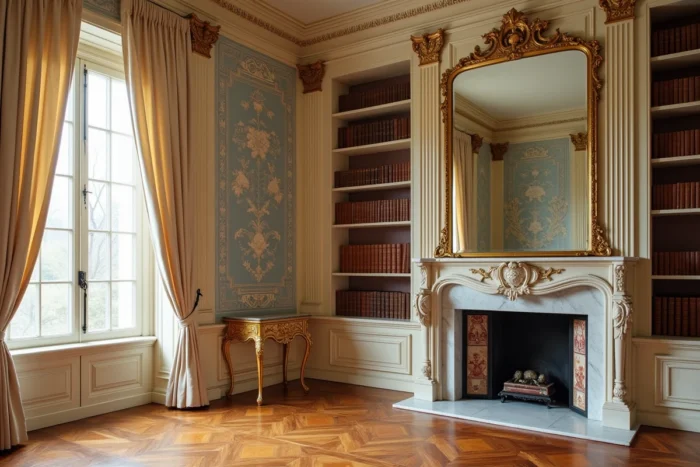
Beistegui did not just furnish a château. He created a universe. Venetian fireplace, tapestries based on Goya’s designs, private theater: each room tells a different story, borrowing from neoclassicism while allowing for fantasies.
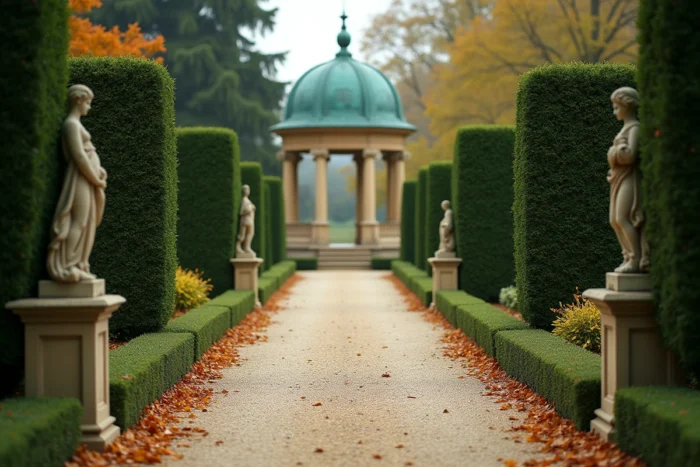
The park is no exception. Beistegui had garden structures built inspired by international models: a Chinese pagoda, a Tartar tent, a Palladian bridge. These constructions were not mere ornaments. They served as a backdrop for the lavish receptions he organized for the artistic and social elite of his time.
The ball of the century in Venice, a clue about the character
To understand Beistegui, one episode suffices. In 1951, he organized a costume ball at the Labia Palace in Venice, remembered as one of the most extravagant social events of the 20th century. This taste for spectacle was directly transposed to Groussay.
Historic monument classification and conservation challenges of the estate
The Château de Groussay has been classified as a historic monument since 1993. This status protects both the building and the remarkable elements of the park, including the garden structures.
Why does this detail matter to the current owner? Because the classification imposes strict constraints on renovations:
- Any modification to the structure or facades requires the approval of the architect of the Buildings of France, which extends timelines and increases costs
- The materials used must respect original techniques, which excludes many modern, less expensive solutions
- In return, the owner can access public subsidies and tax incentives related to heritage patronage
This regulatory framework explains the choice of an SCI and a cultural project. An empty and closed classified château costs a fortune to maintain. Opening it to the public, even partially, allows for justifying aid and generating revenue.
From the Duchess of Charost to the SCI: a timeline of the château’s owners
The château has not always been this flamboyant place. Its construction began in 1815, initiated by the Duchess of Charost, as a simple country house. The original building is modest compared to what it would become.
The timeline of ownership helps to understand the successive transformations:
- The Duchess of Charost had the château built in 1815 as a country residence
- Charles de Beistegui acquired the estate and radically transformed it between the 1930s and 1970, adding the theater, library, and park structures
- After Beistegui’s death in 1970, the château changed hands several times, with a gradual degradation of the estate
- A period of judicial sequestration preceded the 2021 acquisition by the current SCI
The common thread of this story is the fragility of private residences. Without a passionate and financially solid owner, a classified château can deteriorate in just a few decades, even in Île-de-France.
Groussay after the renovations: what future for this château in the Yvelines
The project led by the new owner mentions immersive spaces. In concrete terms, this means that Groussay could join the trend of heritage sites that combine traditional visits with digital or scenographic experiences.
This type of conversion is already working in several French châteaux. The challenge for Groussay is twofold: to respect Beistegui’s spirit, who conceived the place as a permanent spectacle, while attracting a broader audience than just decorative arts enthusiasts.
Groussay remains a unique case in French heritage. Neither a national museum, nor a luxury hotel, nor an abandoned ruin, the château is seeking its model between private patronage and cultural openness. The answer will depend as much on the financial means of the SCI as on the ability of the place to tell its story in ways other than through explanatory panels.