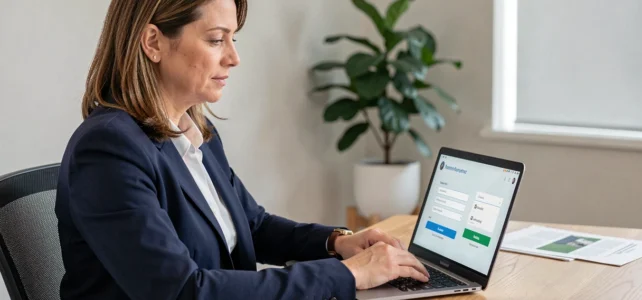
A real estate client space is a secure web interface that centralizes documents, exchanges, and operations related to a property (receipts, calls for funds, contracts, work tracking). Knowing how to access it promptly avoids calls to the agency and delays in processing by mail. However, one must understand how these platforms work, what they protect, and what they actually allow you to do.
Authentication and security of an online real estate client space
Before consulting any document, each platform imposes an identification protocol. Most real estate client spaces rely on a pair of username and password provided at the signing of the contract (lease, management mandate, or condominium deed).
The temporary password provided by the agency or property manager must be changed upon first login. A strong password combines at least twelve characters, uppercase letters, numbers, and a special character. Some platforms add two-factor authentication via SMS or an app, which significantly reduces the risk of unauthorized access.
When a property manager offers to access the Ker Expo client space, the procedure follows the same pattern: account creation, email validation, and then password customization. The process takes a few minutes and provides access to all documents related to the property in question.
In case of forgotten username, almost all portals provide a reset procedure via email address. If the address associated with the account is no longer active, direct contact with the manager remains the only solution to regain access.
Documents and operations accessible from a real estate management portal
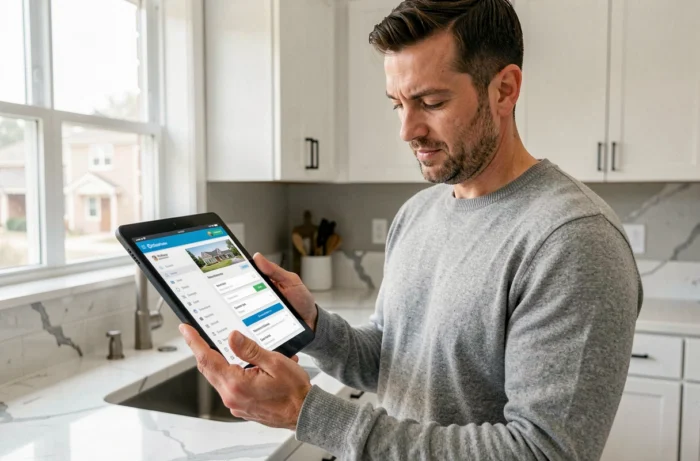
The interest of a client space is not limited to passive consultation. Depending on the profile (tenant, landlord, co-owner), the functionalities vary significantly.
Tenant profile
A tenant typically finds their rent receipts, lease contract, inventory, and payment notices. Most platforms also allow you to report a technical incident directly online, with tracking of the request until resolution.
Landlord profile
The landlord who delegates rental management accesses their management reports, rent collections, and the tax documents necessary for their property income declaration. Some portals display a summary dashboard with the occupancy rate of the property and the history of interventions.
Co-owner profile
- The minutes of the general assembly and the notices are archived and downloadable in PDF format.
- The quarterly calls for funds and the budget forecast from the property manager appear in a dedicated financial section.
- Documents related to approved works (estimates, invoices, schedules) are available for consultation as soon as they are uploaded by the manager.
This segmentation by profile explains why the same manager can offer several distinct spaces, each tailored to the rights and personal data of the concerned user.
Tax declaration and “Manage my real estate” service
Alongside the spaces managed by agencies or property managers, the tax administration provides its own portal. The “Manage my real estate” service, accessible from the personal space on impots.gouv.fr, concerns all property owners.
Since the initial implementation of the system, the operation has been simplified. In 2026, the occupancy declaration is no longer systematically annual: it is only required if the occupancy situation of the housing has changed since the last declaration (new tenant, rental, vacancy, inheritance transfer).
Failure to comply with this obligation results in a fine of 150 euros per undeclared or incorrectly declared property. The deadline to regularize the occupancy situation has been set for June 30, 2026. This penalty applies regardless of your agency or property manager’s client space: it is a separate tax obligation.
Protection of personal data in a secure client space
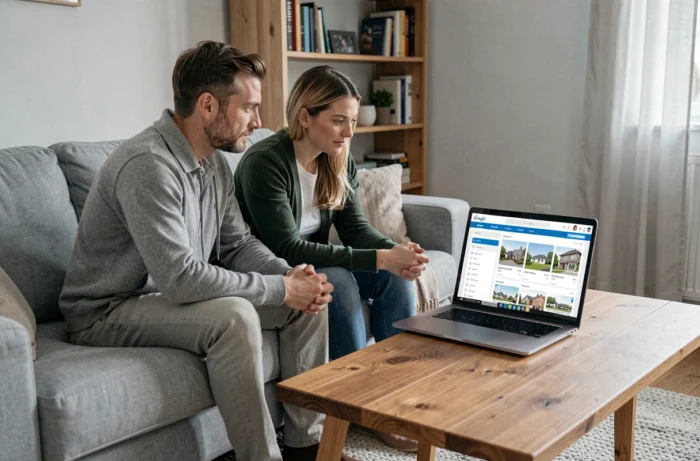
A real estate client space stores sensitive information: civil status, bank details (for rent or charges collection), copies of identity documents, tax notices. The issue of personal data processing arises with each login.
The manager who operates the platform acts as the data controller under the GDPR. Each user has the right to access, rectify, and delete their data. In practice, complete deletion only occurs after the expiration of the legal retention periods (a terminated lease remains archived for several years for accounting and legal reasons).
Two reflexes effectively protect account access:
- Never use the same password as that of an email or social network, as a leak on another service would compromise the real estate space.
- Check that the portal URL starts with “https” and that the security certificate is valid before entering your credentials.
- Always log out after consultation, especially on a shared device or public network.
Data leaks remain a real risk, even for large administrations. Limiting downloaded documents to the strictly necessary and storing local copies in an encrypted folder reduces exposure in case of an incident.
Managing real estate services online ultimately relies on two pillars: a securely configured access from the start, and regular vigilance over shared data. The proliferation of portals (agency, property manager, tax administration) requires each owner or tenant to maintain several distinct accounts, each with its own credentials. Centralizing these accesses in a reliable password manager remains the most concrete precaution to avoid losing time or security.