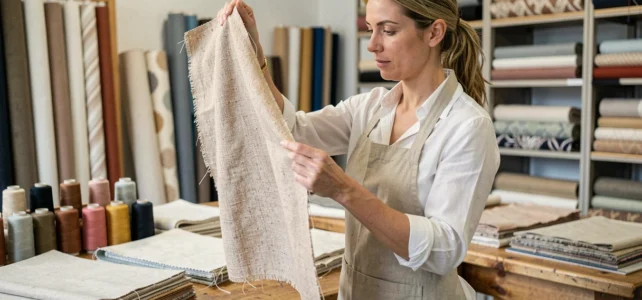
A textile is not just a fabric. It is a flexible two-dimensional material made of fibers, obtained through weaving, knitting, or non-woven processes. This technical definition conditions the entire value chain, from spinning to garment making, and determines the mechanical, thermal, and aesthetic performance of the finished product in the fashion industry.
Mechanical behavior of textile fibers: what dictates the cut and drape
The fiber is the functional unit of the textile. Its nature (cellulosic, protein, synthetic) determines the tenacity, elongation at break, and moisture regain of the yarn, and then of the fabric. A carded-combed cotton does not offer the same resistance to pilling as a textured polyester, and this difference is directly reflected in the longevity of the garment.
The moisture regain of a fiber conditions the thermophysiological comfort of the finished product. Linen absorbs and releases water quickly, which explains its perceived freshness. Spandex, on the other hand, absorbs almost nothing but provides an elastic memory that natural fibers do not possess on their own.
We observe that the selection of a fiber in a design office never relies on a single criterion. The choice results from a trade-off between titration (fineness of the yarn expressed in dtex), Young’s modulus (stiffness), and dye affinity. This is why blended fabrics (cotton-polyester, wool-polyamide) dominate current production: they combine the strengths of each component to meet a specific set of requirements.
Understanding the importance of the textile field involves this technical reading of fibers, well before any stylistic consideration.
Dyeing and textile finishing: chemical and environmental constraints
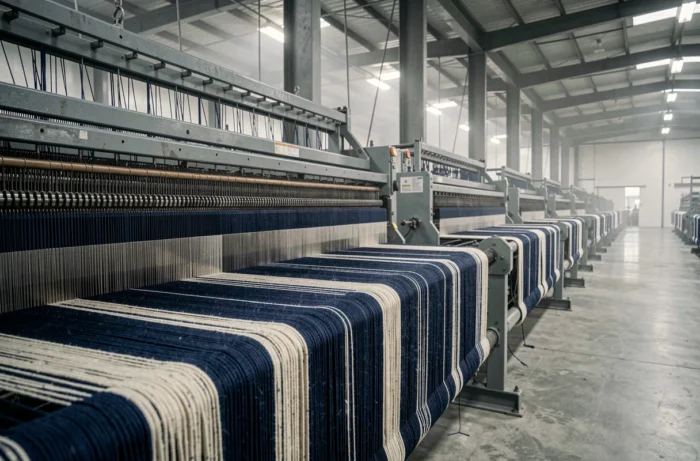
Finishing encompasses the operations of pretreatment, dyeing, printing, and finishing that transform an unbleached fabric into a marketable product. Dyeing is the most water and dye-consuming process in the entire textile chain. Reactive dyes, used on cotton, require baths with a high liquor ratio and repeated rinses to eliminate unfixed dye.
Quality control at the dyeing output focuses on wash fastness, light fastness, and abrasion resistance. These parameters are standardized and condition access to European markets. A textile with insufficient wash fastness generates product returns and destroys profit margins.
Mechanical finishes (calendering, brushing, emerizing) and chemical finishes (water-repellent, flame-retardant, antimicrobial) add functionalities but complicate recycling at the end of life. This point becomes central with the new European regulatory requirements.
ESPR Regulation and digital passport: the regulatory overhaul of textile production in Europe
The ESPR regulation (Ecodesign for Sustainable Products Regulation, EU 2024/1781), adopted in June 2024 and effective from July 18, 2024, changes the game for textile manufacturing. This framework imposes ecodesign requirements covering durability, reparability, recyclability, and recycled content. Textiles are among the priority categories for the 2025-2030 period.
In practical terms, brands and manufacturers will need to prove that their products meet environmental performance thresholds before entering the European market. The design of the fabrics is also affected: choice of fibers, assemblies, and applied chemical treatments.
The regulation also introduces the digital textile product passport (DPP), an electronic identity card attached to each item. This passport will contain verifiable information on:
- The origin of the fibers and the exact composition of the fabric, including any concerning substances present
- Sustainability indicators (pilling resistance, dye fastness, guaranteed number of wash cycles)
- Repair options and recycling pathways compatible with the product’s construction
This system is expected to become mandatory starting in 2027. For design offices and sourcing managers, this means tracking each batch of fibers from spinning and documenting each step of finishing.

Technical textiles and fashion: when performance enters the wardrobe
The boundary between technical textiles and fashion textiles is blurring. Breathable membranes initially developed for military or sports equipment are found in urban collections. France, a world leader in the assembly and sale of technical textiles (notably medical, aerospace composites, and geosynthetics), also fuels this convergence.
A technical textile is distinguished by a measurable function: waterproofness quantified in millimeters of water column, breathability in grams of vapor expelled per square meter over 24 hours, fire resistance classified according to specific standards. When these performances migrate to ready-to-wear, the consumer expects the same rigor in specification.
Blended fabrics made from bio-sourced fibers (technical linen, treated hemp) are gaining ground in this segment. They simultaneously meet performance requirements and the ecodesign criteria of the ESPR regulation, giving them a growing competitive advantage over pure synthetic fibers derived from petroleum.
- Multilayer membranes combining weaving and coating for waterproof and breathable urban jackets
- Thermally bonded nonwovens used as insulating linings, replacing down in certain ranges
- Technical knits with chain stitch incorporating spandex for high-end sportswear
The French textile industry is positioning itself on these high value-added products, far from the entry-level market dominated by low-cost production countries. Mastering the fiber-yarn-fabric-finishing chain remains the differentiating factor for European manufacturers who want to retain their markets in the face of international competition and new regulatory constraints.