Leisure time is a limited resource, and how we use it directly affects the energy available for the rest of the day. A well-chosen hobby is not just a break: it is an activity that generates a measurable benefit for health, concentration, or social connection.
Budget constraints and free leisure: what changes the game
The inflation of recent years has profoundly changed how the French access their leisure activities. Food prices have increased by about 16% over three years, and more than 80% of households say they are concerned about the impact of this rise on their daily lives. The vacation and leisure budget often serves as a variable for adjustment.
This financial pressure pushes towards shorter, more local, and less expensive leisure activities. Rather than giving up free time, the trend is to rethink activities around what costs nothing or almost nothing: outdoor walking, gardening, reading in libraries, free online courses.
To discover leisure activities on Ce Qu’il Faut Savoir, this DIY logic has become a real topic: identifying concrete ideas that do not depend on a subscription or expensive equipment changes daily practice.
- The garden, even a balcony, allows for growing herbs or vegetables without heavy investment, while providing regular contact with nature.
- Home fitness apps (fitness, yoga, strength training) eliminate the barrier of gym fees.
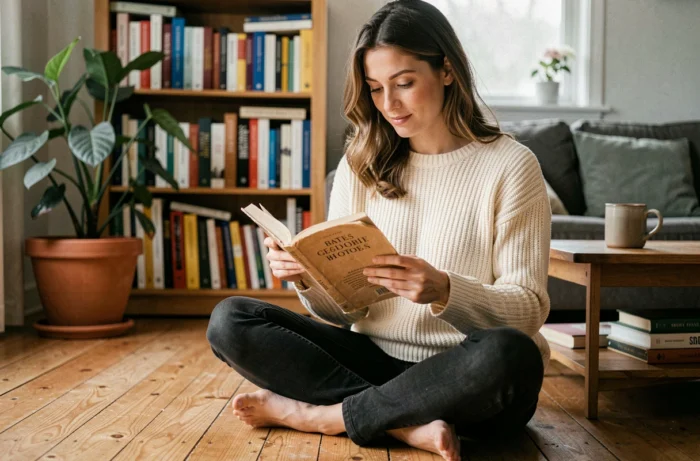
- Municipal media libraries offer much more than books: board games, musical instruments, access to online course platforms.
Daily sports activities: the effect of the Paris 2024 Games
The Paris 2024 Olympic Games have triggered a notable increase in regular sports practice in France. This phenomenon particularly affects those aged 15-29 and women, who have significantly reduced the participation gap with men.
The disciplines that dominate this renewal are walking, running, and fitness activities (fitness, gymnastics). These are not competitive sports for most practitioners, but rather physical hobbies integrated into daily life, which can be done without a club or registration.
Running and trail running: a rapidly growing practice
Trail running is experiencing rapid growth in France. This discipline combines physical effort and immersion in nature, which explains its appeal to a variety of profiles. Access is simple: a pair of suitable shoes, a nearby trail, and the session lasts between thirty minutes and two hours.
The concrete advantage of daily sports is not limited to physical condition. Thirty minutes of moderate activity improves concentration for the rest of the day. Integrating a fixed sports slot into one’s week, even if short, transforms the quality of the remaining free time.
Learning a concrete skill during free time
Watching a series or scrolling through a social network occupies free time without leaving a lasting mark. Learning something tangible produces the opposite effect: the feeling of progress fuels motivation and confidence.
The difference between a passive hobby and a learning hobby lies in a simple criterion: at the end of a month, can you do something you couldn’t do before? If the answer is yes, the time invested has cumulative value.
Accessible learning paths without formal training
Some areas lend themselves particularly well to autonomous and daily practice:
- Technical cooking (fermentation, pastry, cuisine from a specific region) allows for progress meal by meal, with an immediate and shareable result with family.
- Learning a foreign language through audio immersion, for fifteen minutes a day during a commute or household task, produces measurable results in a few months.
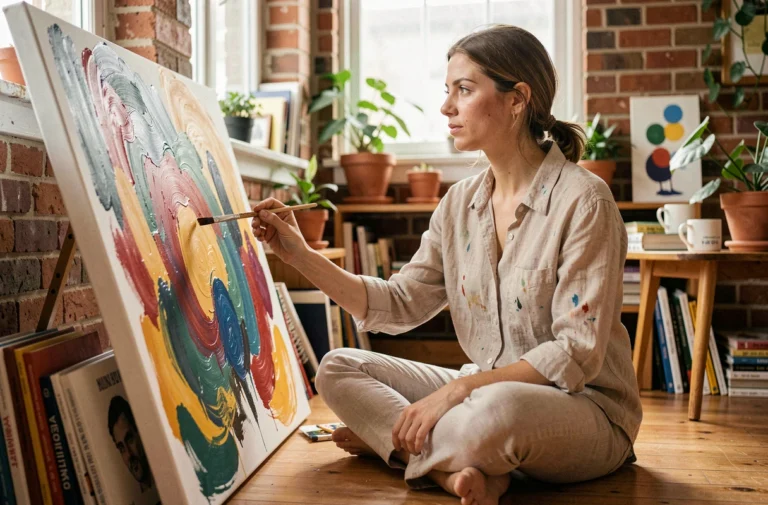
- Drawing or watercolor, practiced with structured tutorials, develops observation and patience without requiring expensive materials.
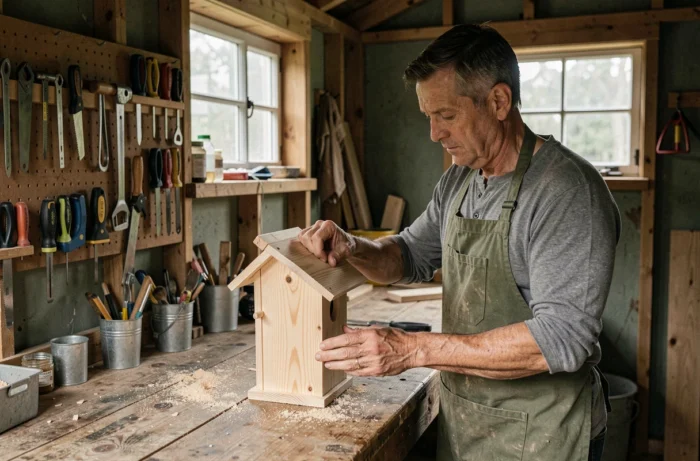
- Repairing objects (sewing, small woodworking, basic electronics) combines manual satisfaction with real savings.
Family leisure: structuring shared moments
Time spent with family only becomes quality leisure if it is distinct from domestic time. Grocery shopping together is not a leisure activity. A family leisure activity requires a dedicated framework where everyone participates actively.
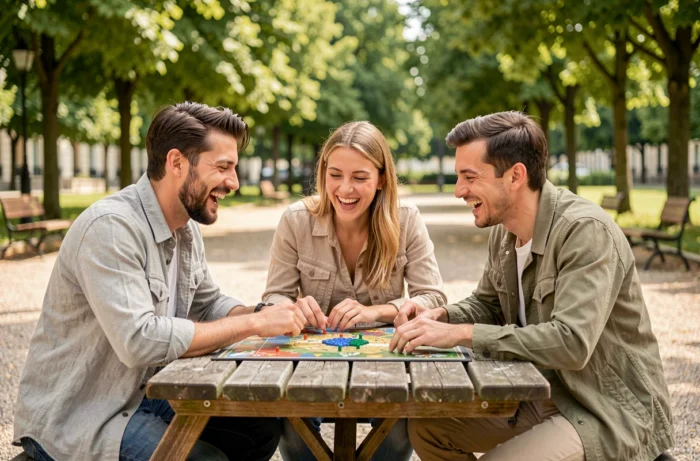
Board games have seen a resurgence of interest in recent years, and for a specific reason: they create direct interaction, without screens, with shared rules. For children, it is a learning experience in strategy and frustration management. For adults, it is a moment of real disconnection.
Local outings and micro-trips
Proximity tourism has strengthened under the combined effects of inflation and ecological awareness. Visiting a natural site, a heritage village, or a craft market within an hour of home fulfills the role of escape without the cost or fatigue of a long trip.
The key is regularity rather than exception. A weekend hike once a month in a different location builds, over a year, a fine knowledge of one’s region and shared memories that rival distant vacations.
Fully enjoying leisure activities on a daily basis relies less on the quantity of available activities and more on the ability to choose those that match real constraints of time, budget, and energy. A hobby that naturally integrates into the week, without logistical friction, is more likely to last than an ambitious project abandoned after three sessions.