
Using your CPF for an online DIY training raises a legitimate question: does this type of course lead to real professional skills, or is it just a dressed-up version of YouTube tutorials? The training offered by organizations like the Academy of DIY focuses on professional pathways (plumbing, electricity, tiling, insulation) with certification at the end. It remains to understand what this actually changes for someone who enrolls.
CPF Out-of-Pocket Costs in 2026: What You’ll Pay Before Starting
Even before choosing a module, there is a financial parameter to consider. Since May 2024, a mandatory contribution applies to any training funded by the CPF. This amount was initially set at 100 euros and has been gradually increased.
In 2025, it rose to 102.23 euros. In 2026, it reaches 103.20 euros, and a new threshold of 150 euros will apply starting in April 2026. For a DIY training course whose total cost can vary depending on the chosen pathway, this amount remains modest compared to the CPF funding mobilized.
Have you already checked your balance on Mon Compte Formation? If it covers the training fee, your out-of-pocket cost is limited to this flat-rate contribution. Some exemption cases exist (job seekers, for example), but for an employee in a position, the out-of-pocket cost is systematic. Choosing an online training with academiedubricolage cpf therefore requires checking both your available balance and the exact pricing conditions of the targeted course.
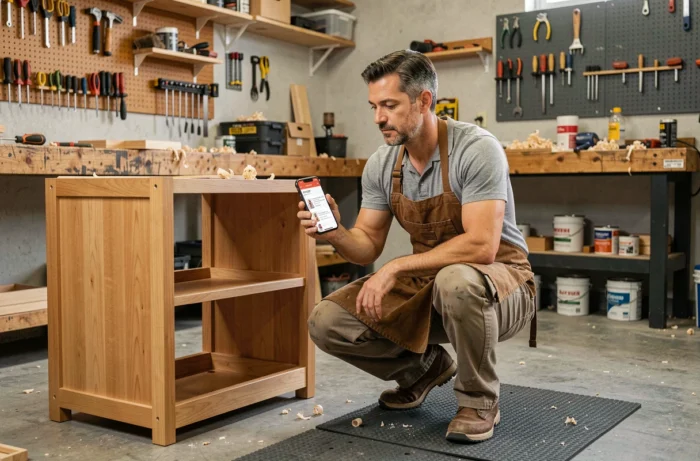
Certified Online DIY Course: Structure and Real Content
SERP competitors often talk about “DIY courses” without distinguishing a one-off tutorial from a real structured program. The difference lies in three concrete elements.
Professional Modules, Not Isolated Videos
The courses at the Academy of DIY cover distinct specialties: plumbing, electricity, tiling, insulation, carpentry. Each specialty is divided into progressive modules, with video supports, PDF documents, and personalized guidance. The indicative duration is measured in months, not hours.
This format distinguishes these trainings from “recreational DIY.” A free tutorial shows how to apply a silicone seal. A certified course explains why a specific type of seal is suitable for a particular configuration, what standards to follow, and how to diagnose a problem before intervening.
Registered Certification and CPF Eligibility
For a training to appear on Mon Compte Formation, it must be linked to a registered certification. This is not an administrative detail: the certification attests to a level of skills recognized by employers. The Academy of DIY claims this registration, placing it in the category of professional training rather than educational leisure.
Why does this distinction matter? Because an employer in the home services, maintenance, or construction sector looks for profiles capable of proving their technical skills. A recognized certificate changes the game during recruitment or job advancement.
Acquired Skills: What Changes in Daily Practice
Learning to DIY “for oneself” and acquiring professional skills in DIY do not involve the same knowledge. Here’s what these courses concretely cover:
- Technical basics by specialty (reading simple plans, choosing suitable materials, adhering to safety standards in electricity or plumbing)
- The ability to diagnose a problem before acting, rather than applying a generic recipe seen online
- Reproducible professional gestures: cutting, installation, connection, finishing, with the right tools and in the correct order
- Routine maintenance of a home or professional premises, applicable to maintenance and home service professions
A structured course develops technical reasoning, not just the gesture. Knowing how to lay tiles is not enough if one does not know how to prepare an uneven surface or calculate cuts based on the geometry of the room.

CPF Fraud and Vigilance: How to Verify a Training Organization
The CPF remains a target for fraudulent practices. Recent Senate reports indicate hundreds of millions of euros diverted through fictitious or very low-quality training. This reality imposes a minimum verification before committing.
Three concrete checks protect your CPF investment:
- Is the organization directly listed on moncompteformation.gouv.fr (and not just via a third-party site that redirects you)?
- Is the targeted certification identifiable in the official directory, with a precise title and a registered code?
- Does the organization display a quality certification (Qualiopi is mandatory to access public training funds)?
Unsolicited phone solicitation, a promise of “100% free” training, or pressure to enroll quickly are classic warning signs. The Academy of DIY, with its consultable reviews and its listing on official platforms, allows this verification. But the reflex to check applies to any organization, without exception.
Concrete Opportunities After a Certified DIY Training
Why invest time and CPF in this type of course? The opportunities are divided into two distinct categories.
The first concerns home service and maintenance professions. Gardening, premises maintenance, or small jobs companies look for versatile profiles capable of handling multiple types of tasks. A DIY certification attests to this versatility.
The second concerns career change or additional activity. An employee who wishes to start a self-employed business in interior work needs to validate their offer. The certification serves as proof of skills to private clients.
The CPF finances a measurable increase in technical skills, provided one chooses a course suited to their professional project. The key remains to precisely identify what one wants to do after the training, rather than enrolling out of opportunity.